
Panasonic NE-1025F Vs Panasonic NE-SA1-W Microwave Oven (2026)
Microwave ovens have transcended their original role of simply reheating leftovers to become essential appliances that redefine convenience, speed, and culinary versatility in both homes and small-scale commercial setups. Among the plethora of options available in the market, Panasonic consistently stands out for its engineering reliability, innovative features, and user-friendly designs. Two notable models in Panasonic’s lineup-the NE-1025F Compact Light-duty Commercial Microwave Oven and the NE-SA1-W-offer distinct advantages depending on your cooking needs. Whether you are a small restaurant owner, a busy office kitchen manager, or a home cook seeking efficiency, understanding the nuances of these two microwaves can save time, money, and frustration. This comparison aims to dissect these models in depth, evaluating every critical aspect from performance to usability.
Quick Comparison Table
| Feature/Specification | Panasonic NE-1025F | Panasonic NE-SA1-W |
|---|---|---|
| Type | Commercial Light-duty Microwave | Home-use Microwave |
| Power Output | 1000 W | 800 W |
| Capacity | 20 L | 20 L |
| Control Type | Dial + Push Button | Dial + Button |
| Preset Cooking Modes | Limited | Multiple |
| Defrost Function | Yes | Yes |
| Cooking Programs | Manual | 4 Auto Menus + Sensor Cook |
| Dimensions (HxWxD) | 12.5 x 19 x 15 in | 11.5 x 19.5 x 15 in |
| Weight | 18 kg | 16 kg |
| Suitable For | Small cafes, offices | Home kitchens |
Panasonic NE-1025F Vs Panasonic NE-SA1-W Microwave Oven
Both the NE-1025F and NE-SA1-W share a reputation for reliability and quality, yet they serve markedly different purposes. The NE-1025F is designed with light-duty commercial applications in mind, offering durability and rapid heating that can withstand frequent use. On the other hand, the NE-SA1-W leans toward the domestic sphere, focusing on convenient, multifunctional cooking that adapts to a variety of home recipes with minimal user intervention.
While they share a similar capacity and size, the NE-1025F is a powerhouse in consistent, high-volume operation, whereas the NE-SA1-W excels in smart cooking features and user-friendly automated programs.
Key Differences At A Glance
- Intended Usage: NE-1025F is commercial-grade; NE-SA1-W is optimized for home kitchens.
- Power Output: NE-1025F delivers 1000 W vs NE-SA1-W’s 800 W, resulting in faster cooking.
- Controls & Automation: NE-1025F relies on manual inputs; NE-SA1-W includes sensor cooking for precision.
- Preset Programs: NE-SA1-W provides more pre-configured cooking programs, reducing guesswork.
- Durability: NE-1025F is designed for high-frequency use in small business settings.
Panasonic NE-1025F Compact Light-duty Commercial Microwave Oven Overview
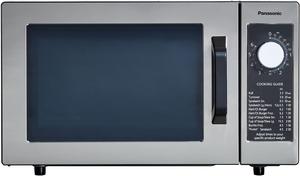
The Panasonic NE-1025F is engineered as a compact, light-duty commercial microwave, making it ideal for small cafes, offices, and food service environments where speed and consistency are key. Its robust 1000 W power output ensures rapid reheating, while the solid construction withstands continuous daily use. The NE-1025F’s simple dial and push-button interface might seem basic, but it offers precise manual control that professionals often prefer over pre-programmed routines. Its 20-liter cavity can accommodate medium-sized plates, allowing for reheating, cooking, and defrosting multiple items efficiently. The design emphasizes practicality, focusing on durability and straightforward operation rather than culinary frills.

Panasonic NE-1025F Compact Light-duty Commercial Microwave Oven Review
Panasonic NE-SA1-W Microwave Oven Overview
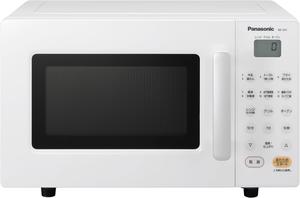
The Panasonic NE-SA1-W represents Panasonic’s commitment to making home cooking effortless. With an 800 W power output, it balances efficiency and energy consumption while still providing sufficient heating capability for everyday use. Unlike the NE-1025F, this model offers multiple auto-cook menus and sensor-based cooking, which adjusts power and cooking time automatically depending on the food’s moisture and density. This is perfect for home users who want consistently cooked meals without monitoring every step. The NE-SA1-W also offers a sleek design suitable for modern kitchens, combining aesthetic appeal with practical features.
Panasonic NE-SA1-W Microwave Oven Review
Feature Comparison
| Feature | NE-1025F | NE-SA1-W |
|---|---|---|
| Auto Cooking Menus | None | 4 Sensor-based menus |
| Defrost Options | Manual | Sensor & weight-based defrost |
| Control Type | Mechanical dial + push button | Dial + sensor button |
| Interior Material | Stainless steel | Easy-clean coated cavity |
| Child Lock | No | Yes |
The NE-SA1-W clearly emphasizes convenience and safety features suitable for home use, whereas the NE-1025F prioritizes straightforward operation and commercial durability.
Cooking Performance Comparison
The NE-1025F’s 1000 W power output enables faster heating cycles, which is essential for commercial environments. It’s ideal for reheating large batches quickly without overheating. The NE-SA1-W, with 800 W, may take slightly longer but benefits from sensor cooking, preventing overcooking and optimizing texture for various foods. Home cooks will appreciate this automated precision, whereas commercial users value the raw speed of the NE-1025F.
Capacity And Size Comparison
Both models offer a 20-liter cavity, which is adequate for medium-sized plates and bowls. However, the NE-SA1-W is slightly more compact externally, making it easier to fit into modern kitchen counters. The NE-1025F’s slightly bulkier construction supports durability and higher-frequency use.
Energy Efficiency
The NE-SA1-W, with its lower wattage and sensor-based cooking, is more energy-efficient for home use. The NE-1025F, while faster, consumes more electricity in short bursts but delivers consistent results needed in commercial operations. In small business scenarios, the extra energy use is offset by time savings.
Ease Of Use
Home users will find the NE-SA1-W significantly easier to use due to its sensor cooking, auto menus, and intuitive interface. The NE-1025F requires manual input for cooking times and power levels, which is ideal for trained users but less convenient for casual users.
Who Should Buy Each Model?
- NE-1025F: Small restaurants, cafes, offices, or anyone needing a durable, high-speed microwave for frequent reheating.
- NE-SA1-W: Home cooks seeking a reliable, convenient, and automated microwave for everyday meals with minimal monitoring.
Final Verdict
If your priority is speed, durability, and commercial readiness, the NE-1025F is the clear choice. Its raw power and robust design make it an ideal companion in busy food-service environments. Conversely, for convenience, smart cooking, and household use, the NE-SA1-W stands out. Its sensor-driven auto menus and energy-efficient design offer a seamless cooking experience tailored for home kitchens.
FAQs
What Are The Key Differences Between The Panasonic NE-1025F And The Panasonic NE-SA1-W Microwave Ovens?
The Panasonic NE-1025F is primarily a commercial-grade microwave with a 1000-watt output, designed for high-frequency use in professional settings. It features simple dial controls, a larger interior capacity, and a more durable build. In contrast, the Panasonic NE-SA1-W is a compact, consumer-oriented microwave with inverter technology for even cooking, digital controls, multiple preset functions, and a smaller footprint suitable for home kitchens.
Which Microwave Is Better For Home Use, The NE-1025F Or The NE-SA1-W?
The NE-SA1-W is better suited for home use because it offers user-friendly digital controls, inverter technology for precise cooking, and a smaller, more convenient size for typical kitchen spaces. The NE-1025F, being a commercial model, may be overpowered and larger than necessary for home cooking needs.
How Do The Cooking Performance And Technology Differ Between The Two Models?
The NE-1025F uses a standard high-power microwave system, which cooks food quickly but may result in uneven heating for delicate items. The NE-SA1-W features inverter technology, which allows for consistent power delivery, resulting in evenly cooked meals, better texture, and the ability to defrost or cook delicate foods without overcooking.
What Are The Differences In Size And Capacity Between The NE-1025F And NE-SA1-W?
The NE-1025F has a larger cavity suitable for bigger dishes or commercial use, while the NE-SA1-W has a more compact design with a smaller capacity, making it easier to fit in home kitchens. Exact internal capacities vary, but the NE-1025F typically exceeds 1 cubic foot, whereas the NE-SA1-W is closer to 0.8 cubic feet.
Which Model Is More Energy-efficient And Cost-effective In The Long Run?
The NE-SA1-W is more energy-efficient for regular home use due to its inverter technology, which optimizes power usage by maintaining consistent energy levels. The NE-1025F, while powerful, consumes more electricity when operated frequently, making it more suitable for commercial settings rather than energy-conscious home use.