
Panasonic NN-SN97JS Vs Panasonic NNST75LBC Microwave Oven (2026)
Microwave ovens have transcended their original role of merely reheating leftovers. Today’s models offer sophisticated features such as sensor cooking, inverter technology, and energy-efficient operation, transforming the kitchen experience for busy families, culinary enthusiasts, and professionals alike. Among the myriad of options in the Panasonic lineup, the NN-SN97JS and NNST75LBC stand out as prominent contenders, each tailored to distinct culinary needs.
The Panasonic NN-SN97JS is designed for those who seek high-performance cooking with powerful wattage and advanced inverter technology, ideal for rapid, even cooking. Meanwhile, the Panasonic NNST75LBC emphasizes convenience and versatility in a sleek, countertop-friendly form, appealing to users with moderate cooking demands who still value quality results. Understanding the nuances between these two models requires a closer look at their features, performance, and usability.
Quick Comparison Table
| Feature/Specification | Panasonic NN-SN97JS | Panasonic NNST75LBC |
|---|---|---|
| Type | Countertop Microwave | Countertop Microwave |
| Power Output | 1250 Watts | 1200 Watts |
| Technology | Inverter, Genius Sensor | Inverter, Sensor Cooking |
| Capacity | 2.2 cu. ft. (63 liters) | 1.6 cu. ft. (45 liters) |
| Dimensions | 21.5″ W x 14.3″ D x 12.8″ H | 20.6″ W x 16.3″ D x 12.4″ H |
| Weight | 46 lbs | 43 lbs |
| Preset Programs | 14 | 11 |
| Turntable Diameter | 16.5 inches | 13.6 inches |
| Control Panel | Touchpad + Dial | Touchpad |
| Energy Efficiency | High | Moderate |
| Price Range | Higher-end | Mid-range |
Panasonic NN-SN97JS Vs Panasonic NNST75LBC Microwave Oven
At first glance, both models share Panasonic’s hallmark reliability and inverter technology, which ensures even heating and defrosting. However, a deeper dive reveals meaningful differences: the NN-SN97JS is larger, more powerful, and feature-rich, catering to heavy-duty use and precision cooking, while the NNST75LBC is more compact, practical, and cost-effective, making it ideal for everyday kitchen use with moderate cooking demands.
Key Differences At A Glance
- Capacity & Size: NN-SN97JS holds 2.2 cu. ft., suitable for large dishes; NNST75LBC has 1.6 cu. ft., better for small to medium portions.
- Power Output: NN-SN97JS delivers 1250W, slightly stronger than NNST75LBC’s 1200W, offering faster cooking times.
- Preset Programs: NN-SN97JS comes with 14 programs vs. NNST75LBC’s 11, offering more automated options.
- Turntable Diameter: NN-SN97JS accommodates larger plates (16.5 inches) compared to 13.6 inches.
- Price Point: NN-SN97JS is a premium option, while NNST75LBC is more budget-friendly.
Panasonic NN-SN97JS Microwave Oven Overview
The Panasonic NN-SN97JS is the flagship model in its series, designed to deliver consistent cooking performance for households and small commercial kitchens. Equipped with Inverter Technology, it allows for precise temperature control and even cooking across a wide range of foods-from delicate defrosting to high-heat popcorn preparation. Its Genius Sensor automatically adjusts cooking times and power levels based on the moisture content of the food, reducing the risk of overcooking.
The interior is expansive at 2.2 cu. ft., easily accommodating large dinner plates, multiple bowls, or a sizable casserole dish. The 1250W power output ensures rapid cooking, while the 16.5-inch turntable provides stability and even rotation for consistent results. Its stainless steel interior not only enhances durability but also facilitates easy cleaning.

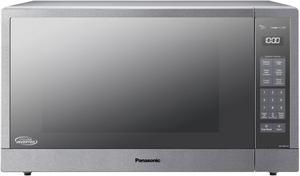
Panasonic NN-SN97JS Microwave Oven Review
Panasonic NNST75LBC Microwave Oven Overview
The Panasonic NNST75LBC is a versatile countertop microwave that balances performance with simplicity. Though slightly smaller in capacity (1.6 cu. ft.), it remains capable of handling everyday cooking tasks with efficiency. Inverter Technology ensures food is cooked evenly and gently, avoiding hot spots commonly found in conventional microwaves.
The Sensor Cooking function automates time and power adjustments for optimal results, while its compact design and 13.6-inch turntable make it suitable for kitchens with limited counter space. While lacking some of the premium features of the NN-SN97JS, its thoughtful preset programs and intuitive touchpad control provide convenience for users who prioritize straightforward usability.
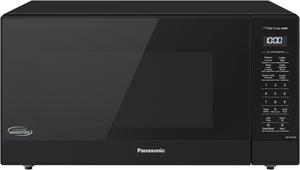
Panasonic NNST75LBC Microwave Oven Review
Feature Comparison
| Feature | NN-SN97JS | NNST75LBC |
|---|---|---|
| Inverter Technology | Yes | Yes |
| Sensor Cooking | Genius Sensor (advanced) | Standard Sensor |
| Preset Programs | 14 | 11 |
| Quick Minute Function | Yes | Yes |
| Defrost by Weight | Yes | Yes |
| Turntable Size | 16.5 inches | 13.6 inches |
| Interior Material | Stainless Steel | Stainless Steel |
| Control Interface | Touchpad + Dial | Touchpad |
Cooking Performance Comparison
The NN-SN97JS excels in precision and speed, thanks to its higher wattage and Genius Sensor. Its inverter technology ensures even heating, whether defrosting meat or reheating leftovers. Large dishes, soups, and baked items cook uniformly, reducing the chance of cold spots.
The NNST75LBC, while slightly less powerful, still delivers consistent results for typical household use. Its sensor cooking handles reheating and basic cooking with minimal supervision but may require more careful attention for larger or denser dishes.
Capacity And Size Comparison
- NN-SN97JS: 2.2 cu. ft. interior, supporting larger dinnerware and family-sized meals. Dimensions: 21.5″ W x 14.3″ D x 12.8″ H.
- NNST75LBC: 1.6 cu. ft. interior, more compact for small kitchens. Dimensions: 20.6″ W x 16.3″ D x 12.4″ H.
The SN97JS is better for households with frequent entertaining or batch cooking, while the ST75LBC fits comfortably in tighter spaces.
Energy Efficiency
Both models utilize inverter technology, which adjusts microwave power dynamically, making them more energy-efficient than conventional microwaves that cycle on and off. The NN-SN97JS, despite its higher wattage, optimizes energy use during cooking, reducing wasted electricity. The NNST75LBC has slightly lower energy demands due to its smaller size and lower wattage, making it a practical choice for energy-conscious users.
Ease Of Use
- NN-SN97JS: Offers a combination of touchpad and dial controls. The Genius Sensor simplifies cooking, but the abundance of features may require a learning curve for new users.
- NNST75LBC: Simpler touchpad interface and fewer presets make it intuitive and beginner-friendly, with minimal setup required.
Who Should Buy Each Model?
- Panasonic NN-SN97JS: Ideal for large families, culinary enthusiasts, or anyone who frequently cooks complex dishes requiring precise control and higher capacity. Also suited for those who entertain often or require consistent, high-speed cooking.
- Panasonic NNST75LBC: Best for smaller households, apartment kitchens, or individuals seeking a reliable, easy-to-use microwave for daily reheating, cooking, and defrosting.
Final Verdict
The choice between the NN-SN97JS and NNST75LBC ultimately hinges on size, power, and cooking ambition. The NN-SN97JS is a powerhouse, perfect for those who demand versatility and high-capacity performance. Conversely, the NNST75LBC offers a balanced approach, providing quality results without the premium cost or complexity, making it an excellent choice for everyday use.
FAQs
What Are The Main Differences In Power And Cooking Performance Between The Panasonic NN-SN97JS And NNST75LBC?
The Panasonic NN-SN97JS is a high-power microwave offering up to 1250 watts of cooking power, providing faster and more even heating, while the NNST75LBC offers 1000 watts. The higher wattage in the NN-SN97JS allows for quicker cooking times and improved efficiency, particularly for dense or frozen foods.
How Do The Capacities Of These Two Microwaves Compare?
The NN-SN97JS features a larger 2.2 cubic feet interior, which accommodates bigger dishes and allows for cooking multiple items simultaneously. The NNST75LBC has a smaller 1.5 cubic feet capacity, suitable for standard household use but limiting for larger cookware or batch cooking.
Are There Significant Differences In Features And Technology Between The Two Models?
Yes, the NN-SN97JS includes advanced inverter technology for more precise cooking and maintains consistent temperatures, while the NNST75LBC uses conventional microwave technology. The NN-SN97JS also offers sensor cooking for automatically adjusting time and power levels, whereas the NNST75LBC relies more on manual settings.
Which Model Is More Energy-efficient And Cost-effective For Long-term Use?
The NN-SN97JS, despite its higher wattage, may be more energy-efficient in practice due to faster cooking times and inverter technology that reduces unnecessary power surges. The NNST75LBC consumes less power per use but may require longer cooking times, potentially increasing overall energy usage for certain tasks.
How Do The Sizes And Designs Of The Panasonic NN-SN97JS And NNST75LBC Affect Kitchen Compatibility?
The NN-SN97JS is larger and heavier, requiring more countertop or built-in space, making it better suited for spacious kitchens. The NNST75LBC is more compact and lightweight, fitting into smaller spaces and ideal for apartments or kitchens with limited counter area. Both have sleek designs, but the NN-SN97JS offers a more professional, modern aesthetic.