
Panasonic NE-1025F Vs Panasonic NNST75LBC Microwave Oven (2026)
Microwave ovens have become indispensable appliances in both homes and commercial kitchens. From reheating leftovers to cooking full meals, their convenience and versatility are unmatched. Among the myriad of options available, Panasonic has consistently been recognized for producing reliable, high-performance microwaves that cater to a wide spectrum of users-from home cooks to small businesses. Two of their noteworthy models, the Panasonic NE-1025F and the Panasonic NN-ST75LBC, offer unique advantages depending on the intended use. While both deliver Panasonic’s signature quality, they are designed with distinct target audiences and functionalities in mind. This article delves deep into their features, performance, and practical utility, helping prospective buyers make an informed decision.
Quick Comparison Table
| Feature / Specification | Panasonic NE-1025F | Panasonic NN-ST75LBC |
|---|---|---|
| Type | Commercial Light-duty | Home/Light Commercial |
| Cooking Power | 1000 W | 950 W |
| Capacity | 25 liters | 27 liters |
| Control Type | Mechanical / Dial | Touchpad / Electronic |
| Defrost Function | Yes | Yes |
| Preset Menus | No | Yes |
| Turntable / Tray | Turntable | Turntable |
| Exterior Material | Stainless Steel | Stainless Steel |
| Suitable For | Offices, small eateries, cafes | Home kitchens, small apartments, offices |
| Dimensions (WxHxD) | 520 x 316 x 438 mm | 484 x 287 x 382 mm |
| Weight | 17.5 kg | 15.7 kg |
| Price Range | Higher | Moderate |
Panasonic NE-1025F Vs Panasonic NN-ST75LBC Microwave Oven
At first glance, both models may seem similar-they both feature stainless steel exteriors, robust power, and compact designs. However, the NE-1025F is tailored more toward commercial settings where durability and continuous operation are priorities. Conversely, the NN-ST75LBC caters primarily to household kitchens, offering convenience-focused features like preset menus and electronic touch controls. This distinction makes the comparison crucial for buyers seeking the right balance between functionality, ease of use, and cost-effectiveness.
Key Differences At A Glance
- Target Usage: NE-1025F excels in commercial or semi-commercial environments; NN-ST75LBC shines in home kitchens.
- Control Mechanism: NE-1025F uses a manual dial system, while NN-ST75LBC features touchpad controls with multiple preset menus.
- Cooking Capacity: NN-ST75LBC has a slightly larger capacity (27L vs 25L), giving it an edge for larger household meals.
- Durability and Build: NE-1025F is built to withstand frequent use in office pantries or small cafes, whereas NN-ST75LBC emphasizes user-friendly convenience.
Panasonic NE-1025F Compact Light-duty Commercial Microwave Oven Overview
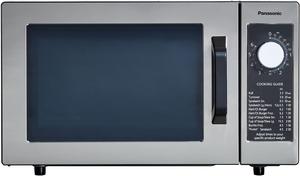
The NE-1025F is designed for efficiency, durability, and continuous operation. Its stainless steel exterior ensures resilience against the daily wear and tear common in commercial kitchens. The 1000-watt output delivers fast, even cooking, and the mechanical dial controls provide straightforward operation-no need to navigate complex menus. The microwave features a reliable turntable that rotates food evenly, preventing hot spots and undercooked areas. Its compact footprint ensures it fits seamlessly into tight kitchen spaces or office pantries without compromising cooking volume. Importantly, this model is designed for light-duty commercial use, striking a balance between industrial resilience and manageable size.

Panasonic NE-1025F Compact Light-duty Commercial Microwave Oven Review
Panasonic NN-ST75LBC Microwave Oven Overview
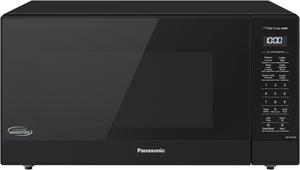
The NN-ST75LBC is a home-friendly powerhouse that combines practicality with convenience. Slightly larger in capacity than the NE-1025F, it’s perfect for preparing family-sized meals or reheating multiple dishes simultaneously. Its electronic touchpad interface allows precise cooking control and includes multiple preset menus for popular cooking tasks, such as reheating beverages, cooking frozen meals, or defrosting meat. The microwave’s 950-watt power output ensures fast cooking, while the turntable guarantees uniform heating. With a sleek, modern stainless steel exterior, the NN-ST75LBC not only performs well but also complements contemporary kitchen aesthetics.
Panasonic NNST75LBC Microwave Oven Review
Feature Comparison
| Feature | NE-1025F | NN-ST75LBC |
|---|---|---|
| Preset Cooking Functions | No | Yes, multiple |
| Defrost Options | Manual | Auto + Weight Defrost |
| Timer Range | Up to 30 minutes | Up to 99 minutes |
| Safety Features | Child lock, overheating protection | Child lock, overheating protection |
| Noise Level | Moderate | Quiet |
| Maintenance | Easy to clean, robust exterior | Fingerprint-resistant, moderate upkeep |
Cooking Performance Comparison
In terms of raw power, the NE-1025F edges slightly ahead with its 1000-watt motor, ideal for reheating large batches quickly-a crucial factor in busy commercial setups. However, the NN-ST75LBC is not far behind, offering 950 watts sufficient for typical household cooking. Where the NN-ST75LBC outshines is precision and convenience: preset menus and auto defrost functions ensure accurate cooking without trial and error, whereas the NE-1025F relies on manual timing and observation.
Capacity And Size Comparison
While the NE-1025F has a capacity of 25 liters, the NN-ST75LBC provides a slightly larger 27 liters. This difference, though modest, can impact usability for families or small gatherings. Dimensionally, the NE-1025F is taller and deeper, reflecting its commercial design, while the NN-ST75LBC’s more compact form is tailored to snug kitchen counters. Both are designed to accommodate medium-sized dishes, but NE-1025F handles multiple small items simultaneously more effectively.
Energy Efficiency
Both models are energy-conscious, but efficiency varies by use. The NE-1025F, with its higher wattage, consumes slightly more power per session but compensates with shorter cooking times-a benefit in high-turnover environments. The NN-ST75LBC, designed for intermittent home use, operates efficiently on shorter, less frequent cycles and includes auto shut-off features to prevent wastage.
Ease Of Use
Ease of use is where these microwaves diverge the most. The NE-1025F favors simplicity with its manual dial interface-perfect for staff who need a no-fuss appliance in a commercial setting. The NN-ST75LBC, on the other hand, offers touchpad controls, digital displays, and programmable presets, making it highly intuitive for home users. Cleaning is straightforward for both, but the NE-1025F’s all-metal interior makes it particularly resilient against spills and splatters in a busy environment.
Who Should Buy Each Model?
- NE-1025F: Ideal for small cafés, offices, or commercial kitchens where speed, durability, and simple operation matter more than preset convenience.
- NN-ST75LBC: Perfect for households or light office use, especially for users who value intuitive controls, preset menus, and slightly larger capacity for family meals.
Final Verdict
Choosing between the Panasonic NE-1025F and NN-ST75LBC ultimately depends on context. For commercial or high-frequency environments, the NE-1025F is the clear winner with its robust build and straightforward design. For home kitchens or light office use, the NN-ST75LBC is the smarter choice, offering convenience, slightly larger capacity, and user-friendly digital features.
FAQs
What Are The Key Differences In Capacity And Size Between The Panasonic NE-1025F And NN-ST75LBC?
The Panasonic NE-1025F is a commercial-grade microwave with a larger internal capacity of 1.2 cubic feet (32 liters), designed to handle higher volume cooking and larger dishes. In contrast, the Panasonic NN-ST75LBC is a consumer-grade microwave with a slightly smaller capacity of 1.5 cubic feet (42 liters) and is optimized for home use. The NE-1025F is generally more robust and heavier, while the NN-ST75LBC focuses on versatility and countertop convenience.
How Do The Power Levels And Cooking Performance Compare?
The NE-1025F offers 1250 watts of cooking power with 10 variable power levels, providing precise control for commercial kitchen applications. The NN-ST75LBC delivers slightly lower power at 1250 watts but includes inverter technology, which allows for more even cooking, defrosting, and reheating, minimizing hot spots. While both cook efficiently, the NE-1025F is better suited for rapid high-volume cooking, whereas the NN-ST75LBC emphasizes consistent home-cooking results.
Which Model Is Better For Commercial Versus Home Use?
The Panasonic NE-1025F is specifically designed for commercial use, including restaurants, cafeterias, and catering, with durable components, stainless steel interior, and long operating hours. The NN-ST75LBC is a domestic microwave tailored for home kitchens, with features like inverter technology, sensor cooking, and user-friendly interfaces. Using the NE-1025F at home is possible but may be excessive in size and functionality.
What Safety And Usability Features Distinguish These Two Models?
The NE-1025F emphasizes commercial safety with features such as a robust door interlock system, durable control panel, and heat-resistant exterior. The NN-ST75LBC includes home-oriented safety features like child lock, automatic sensor cooking, and easy-to-clean interior. The NE-1025F is built for durability and continuous use, while the NN-ST75LBC prioritizes convenience and operational simplicity.
How Do The Prices And Warranty Options Compare?
The NE-1025F typically has a higher price point due to its commercial-grade design, stainless steel construction, and high-volume capacity. It usually comes with a standard one-year limited warranty, with optional extended warranties for commercial use. The NN-ST75LBC is more affordable for home users, often available with a one-year manufacturer warranty, focusing on reliability for everyday domestic use rather than intensive commercial cycles.