
Panasonic NN-SB438S Vs Panasonic NN-SN76LS Cyclonic Inverter Countertop Microwave Oven (2026)
Microwave ovens have become indispensable in modern kitchens, transforming how we prepare and enjoy meals. They combine speed, convenience, and versatility, offering solutions for reheating, defrosting, and even full-scale cooking. Panasonic, a brand renowned for innovation and durability, offers an array of models, two of which-the NN-SB438S Compact Microwave Oven and the NN-SN76LS Cyclonic Inverter Countertop Microwave Oven-stand out for their distinct features and performance.
Choosing between these two models is not merely a matter of price; it requires understanding how their cooking technology, size, power efficiency, and usability align with your culinary needs. This comparison will dive deep into every critical aspect, equipping you with the knowledge to make an informed choice.
Quick Comparison Table
| Feature | Panasonic NN-SB438S | Panasonic NN-SN76LS Cyclonic Inverter |
|---|---|---|
| Power Output | 900W | 1200W |
| Cooking Technology | Conventional | Cyclonic Inverter |
| Capacity | 0.8 cu. ft. | 1.2 cu. ft. |
| Control Panel | Push-button | Touchscreen with Presets |
| Defrost Function | Yes | Yes, with Smart Inverter |
| Weight | 30 lbs | 38 lbs |
| Dimensions (W x D x H) | 20.9 x 16.5 x 12.2 in | 21.3 x 19 x 12.5 in |
| Price Range | Budget-Friendly | Mid-to-High Range |
| Special Features | Compact design, easy-to-use interface | Cyclonic heating, inverter technology, sensor cooking |
Panasonic NN-SB438S Vs Panasonic NN-SN76LS Cyclonic Inverter Countertop Microwave Oven
At first glance, both models are countertop microwaves designed to simplify kitchen tasks, but they cater to different user needs. The NN-SB438S emphasizes compactness, affordability, and basic functionality, making it ideal for smaller kitchens, dorms, or apartments. In contrast, the NN-SN76LS leverages Cyclonic Inverter technology, offering precise heating, larger capacity, and advanced cooking features for those who demand more from their microwave.
Key Differences At A Glance
- Cooking Technology: The NN-SN76LS uses inverter technology for consistent, even cooking, while the NN-SB438S relies on traditional microwave heating.
- Capacity: NN-SN76LS accommodates larger dishes due to its 1.2 cu. ft. interior, versus NN-SB438S’s 0.8 cu. ft.
- Power Output: NN-SN76LS delivers 1200W for faster cooking, while NN-SB438S has 900W.
- Interface: The SN76LS features a modern touchscreen with cooking presets; the SB438S has a straightforward push-button interface.
- Price: The NN-SB438S is more budget-friendly, while the NN-SN76LS commands a higher price due to its advanced features.
Panasonic NN-SB438S Compact Microwave Oven Overview
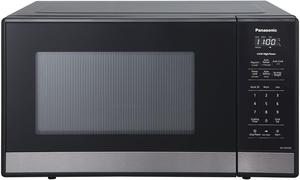
The NN-SB438S is designed for simplicity and efficiency. Its compact footprint ensures it fits comfortably in tight spaces, and its 900W power output makes it suitable for everyday reheating, basic defrosting, and simple cooking. The push-button controls are intuitive, minimizing the learning curve for users who prefer straightforward operation without a lot of tech bells and whistles.
Despite its smaller capacity, the SB438S delivers reliable performance for families or individuals who need a no-fuss microwave. Its lightweight design makes it easy to relocate, and its internal cavity is sufficiently spacious for standard plates and bowls.

Panasonic NN-SB438S Compact Microwave Oven Review
Panasonic NN-SN76LS Cyclonic Inverter Countertop Microwave Oven Overview
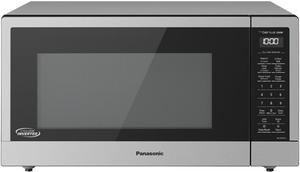
The NN-SN76LS elevates countertop microwave functionality with Cyclonic Inverter technology, which distributes heat evenly throughout food. This prevents overcooking at the edges and undercooking in the center-a common issue with conventional microwaves. With 1200W of power and a 1.2 cu. ft. interior, it comfortably accommodates large dinner plates, casserole dishes, and multiple containers simultaneously.
The touchscreen interface enhances convenience, featuring preset cooking programs, sensor-based defrosting, and memory functions for repeat recipes. It is designed for those who want both speed and precision, whether reheating leftovers, cooking fresh meals, or defrosting frozen items efficiently.
Panasonic NN-SN76LS Cyclonic Inverter Countertop Microwave Oven Review
Feature Comparison
| Feature | NN-SB438S | NN-SN76LS |
|---|---|---|
| Cooking Precision | Standard | Inverter Cyclonic (even heating) |
| Preset Programs | Limited | Multiple (Popcorn, Pizza, Sensor Cooking) |
| Defrosting | Manual | Sensor + Inverter |
| Interior Material | Standard Enamel | Stainless Steel (durable & easy-clean) |
| Noise Level | Moderate | Quiet Operation |
| Safety Features | Child Lock | Child Lock + Overheat Protection |
The SN76LS clearly excels in precision cooking, presets, and advanced safety, while the SB438S prioritizes simplicity and affordability.
Cooking Performance Comparison
- NN-SB438S: Adequate for standard microwave tasks such as reheating beverages, defrosting small portions, or cooking simple meals. Occasional uneven heating may occur due to conventional microwave energy distribution.
- NN-SN76LS: Inverter technology ensures even heat penetration and reduced cooking times. Complex dishes or larger portions benefit from consistent results, making it ideal for serious home cooks.
Capacity And Size Comparison
The SN76LS’s 1.2 cu. ft. capacity allows for more flexibility with dish sizes and batch cooking, whereas the SB438S’s 0.8 cu. ft. capacity is perfect for single meals or limited counter space. Both models are countertop-friendly, but SN76LS occupies more surface area and is slightly heavier.
Energy Efficiency
Despite its higher power rating, the SN76LS is surprisingly efficient due to inverter technology, which modulates power rather than cycling it on and off, reducing wasted energy. The SB438S uses a conventional method, which may slightly increase electricity usage over time but remains economical due to its lower wattage.
Ease Of Use
- NN-SB438S: Very user-friendly, minimal buttons, quick-start features. Ideal for beginners or users who prefer straightforward operation.
- NN-SN76LS: Touchscreen and presets make cooking more precise but may have a learning curve for those unfamiliar with digital interfaces. Once mastered, it offers unmatched convenience and versatility.
Who Should Buy Each Model?
- NN-SB438S: Best for small households, budget-conscious buyers, dorm rooms, or anyone seeking a simple, reliable microwave for basic tasks.
- NN-SN76LS: Suitable for larger families, home chefs, and anyone looking for precise cooking, larger capacity, and advanced features. Perfect for meal prep or cooking a variety of foods efficiently.
Final Verdict
Choosing between the Panasonic NN-SB438S and NN-SN76LS comes down to purpose and priorities. If you value simplicity, affordability, and a compact design, the SB438S delivers excellent performance without overwhelming features. If you require advanced cooking capabilities, even heating, and larger capacity, the SN76LS is a worthy investment, offering technology that makes meal preparation faster, easier, and more reliable.
FAQs
What Are The Main Differences In Power And Cooking Performance Between The Panasonic NN-SB438S And NN-SN76LS?
The Panasonic NN-SB438S offers 1200 watts of cooking power, suitable for standard household cooking needs, while the NN-SN76LS provides 1250 watts, slightly higher, which allows for faster cooking and more even heating. Both feature Panasonic’s cyclonic inverter technology, but the NN-SN76LS also incorporates a more advanced inverter system for finer temperature control and consistent results, particularly beneficial for delicate cooking tasks.
How Do The Sizes And Capacities Of These Two Microwaves Compare?
The NN-SB438S has a 1.2 cubic feet interior capacity, while the NN-SN76LS offers a larger 2.2 cubic feet capacity, making it better suited for larger dishes or family-sized meals. The turntable diameter of the NN-SB438S is smaller, whereas the NN-SN76LS uses a flatbed design, eliminating the turntable entirely, which allows for more flexible placement of large or irregularly shaped cookware.
Do Both Models Include Pre-programmed Cooking Settings And Sensor Cooking Features?
Yes, both the NN-SB438S and NN-SN76LS come with multiple pre-programmed menus and sensor cooking functions that adjust power and time based on the moisture and temperature of the food. However, the NN-SN76LS has a more extensive range of automatic cooking presets and a more precise sensor system, which improves the accuracy for defrosting, reheating, and cooking different types of food.
What Are The Differences In Control Panels And User Interface Between The Two Models?
The NN-SB438S features a digital control panel with a combination of push buttons and a dial for setting time and power levels, while the NN-SN76LS includes a full touch-sensitive interface with a more intuitive display for navigating cooking modes and settings. The NN-SN76LS also provides quicker access to multi-stage cooking functions, making complex cooking tasks easier to manage.
How Do Energy Efficiency And Noise Levels Compare Between The Panasonic NN-SB438S And NN-SN76LS?
Both models benefit from inverter technology, which reduces energy consumption compared to traditional microwaves by maintaining consistent power levels. The NN-SN76LS, with its larger capacity and advanced inverter design, operates slightly more efficiently and quietly, especially during low-power cooking modes. Users generally report the NN-SB438S is moderately louder due to its smaller size and standard fan system.